The Managers' Guide № 131

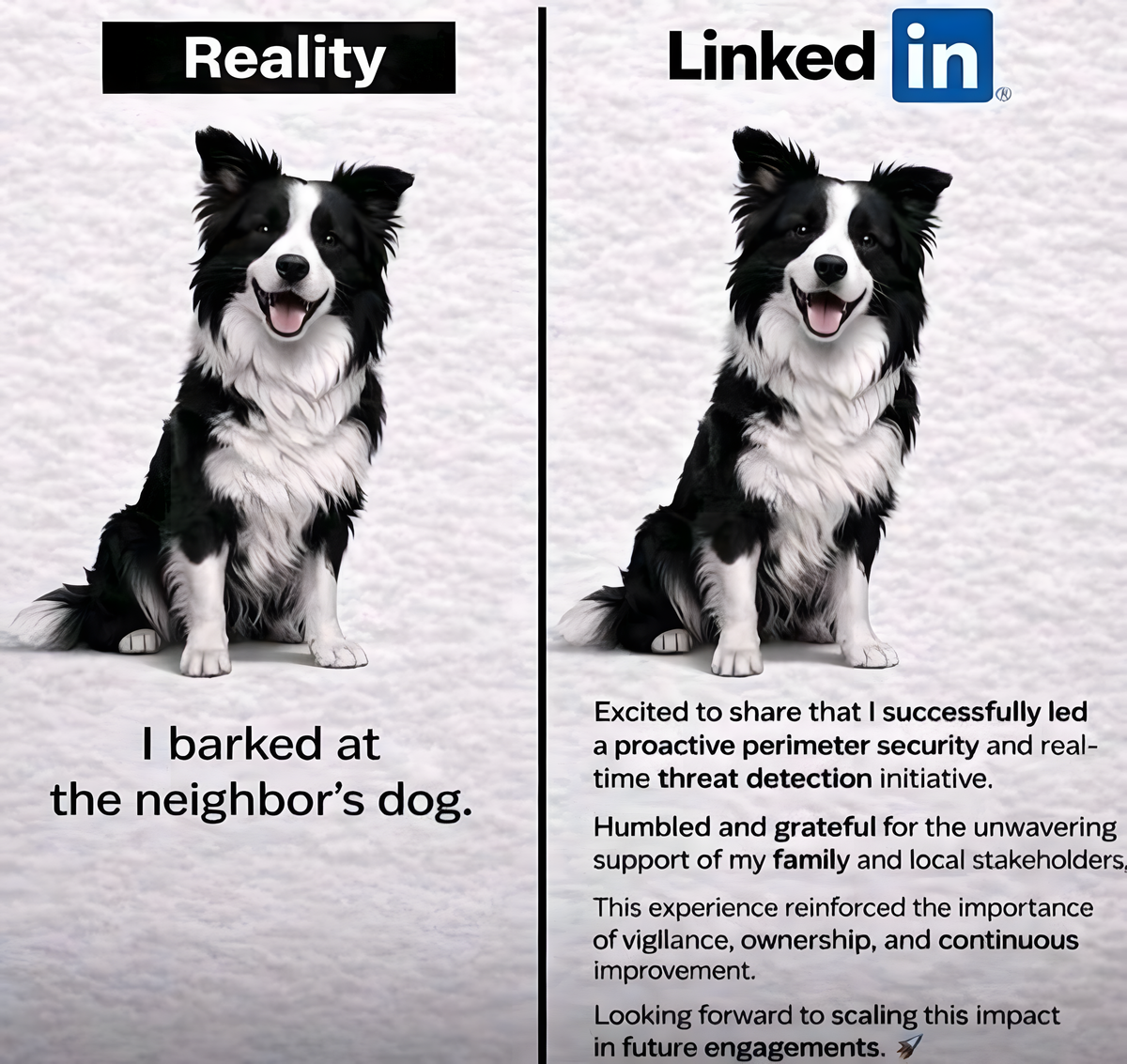
Anthropic to developers: Claude Code makes you more productive when building SaaS apps.
Anthropic to businesses: Our AI agents make SaaS apps obsolete.
Dare Obasanjo
The Engineer To Executive Translation Layer
- 🌉 Translation layer is key — Engineers need to act as their own "translation layer" when communicating with executives, converting technical concepts into business language and outcomes
- ⏰ Executives optimize for time and span — The more senior someone is, the more areas they oversee, meaning less time available for each proposal — it's math, not hierarchy
- 💼 Think like your audience — Executives are answerable to boards, shareholders, and customers; they focus on company-wide impact, not just engineering improvements
- ❓ Anticipate the standard questions — Always address: cost, ROI, alternatives considered, timeline, success metrics, risks, ownership, and impact on other teams
- 💰 "So what" is crucial — Don't just state facts like "build times doubled" — explain the business impact: "equivalent of a full headcount lost to inefficiency"
- 📝 Solutions over problems — Come with proposed solutions and alternatives you've considered, not just problem statements requiring executive decision-making
- ⚡ Brevity wins — Keep proposals to one page, 5 slides, or 5 minutes — executives have limited bandwidth across many areas of responsibility
- 🎯 Map to business outcomes — Engineering goals must clearly connect to executive priorities like increasing EBITDA, reducing customer acquisition costs, or improving retention
- 🗣️ Language matters — Avoid technical jargon (API, CI/CD, latency) and use business language tied to measurable outcomes and timelines
- 🚀 Own the translation — Don't expect your CTO to translate your proposals up the chain — doing this work yourself builds valuable communication skills and gets better results
The Math of Why You Can't Focus at Work
- 🧠 Deep work is under siege — Paul Graham identified this in 2009, but it's gotten exponentially worse with Slack, Teams, and instant-response culture making interruption-driven work the norm
- 📊 Three parameters control your entire day's productivity — Lambda (λ) measures interruption frequency per hour, Delta (δ) tracks recovery time in minutes, and Theta (θ) defines minimum time needed for meaningful work
- ⚡ Recovery time is the hidden killer — Even a "quick 2-minute question" can cost 15-20 minutes of recovery time as your brain reloads context and mental models
- 🔄 Interruptions cascade and compound — Multiple interruptions close together create longer recovery penalties, turning what should be productive time into extended gray zones of cognitive limbo
- 📏 Time fragmentation destroys value — Five 10-minute blocks don't equal one 50-minute block; work below your theta threshold simply doesn't compound into meaningful progress
- 📈 Most people underestimate their real interruption rate — The math reveals that what feels like "occasional interruptions" often translates to 2+ interruptions per hour, systematically destroying focus blocks
- 🎯 Capacity formula quantifies real productivity — Your daily output equals the sum of focus blocks divided by your minimum work threshold, making productivity measurable rather than subjective
- 🗓️ Good vs bad days have stark mathematical differences — Bad days might yield 1 deep work block with 3h 58m focus time, while good days can produce 3 deep blocks with 6h 14m despite fewer total hours
The Product-Minded Engineer: The importance of good errors and warnings
- 📚 Book Overview — Drew Hoskins wrote "The Product-Minded Engineer" to help software engineers become more product-minded, especially as AI tools generate more code and startups seek engineers who can blend mini-PM and dev roles
- 👨💻 Author's Impressive Background — Drew spent 20+ years at Microsoft (C++ compiler), Facebook (platform APIs), Oculus (web platform rebuild), and Stripe (Connect product) before becoming a PM at Temporal — ideal experience for writing this guide
- 🎯 Product-Minded Skills Development — Key advice includes asking "why" frequently, switching between system and user perspectives, using scenario simulation, engaging with customer support, and having devs help author use cases
- 🤖 AI Makes Product Thinking More Critical — Autonomous agents now regularly interact with error messages and fail when they're unhelpful, making good diagnostics essential since agents are billed on usage and poor errors cost time/money
- ⚠️ Errors Are Primary Interfaces — For complex applications, diagnostics become the main user interface since most user time is spent dealing with errors and progressing through them — yet errors are often overlooked in design
- 🎭 Error Categorization Framework — Errors should be categorized into five types (assertions, preconditions, validation, runtime, infrastructure) with different audiences (your team, other developers, end users) and timing considerations
- 🎯 Persona-Driven Error Messages — Messages must be tailored to the right audience using appropriate vocabulary — the famous "PC Load Letter" failed because it used printer technician language for regular users
Why Am I Doing the Thinking for You?
- 🤔 Stop outsourcing your thinking — Asking "what do you think?" without sharing your own opinion dumps cognitive work onto others and slows down decision-making
- 💡 Lead with your position — Instead of vague questions, share your recommendation with reasoning, alternatives considered, and a clear path forward with deadlines
- ⚡ Transform collaboration dynamics — Change "help me think" into "check my thinking" to respect people's time and create actionable discussions
- 🎯 Reduce decision paralysis — Clear positions give teams something concrete to rally around or push back against, enabling faster decisions than ambiguous questions
- 🛡️ Overcome fear of being wrong — Most people worry about overstepping, but colleagues prefer reacting to concrete proposals over doing thinking work from scratch
- 📝 Provide context when uncertain — If you lack full visibility, still offer a position with caveats like "based on what I know, I'd lean toward X — does that match what you're seeing?"
- 🚀 Embrace productive exposure — Taking a clear stance feels vulnerable but is essential for moving projects forward and demonstrates leadership regardless of seniority level
A little bit uncomfortable
- 🎯 Fear as a growth signal — Discomfort isn't something to avoid but rather a powerful indicator that you're pushing into meaningful territory where real development happens
- 🎤 Vulnerability builds resilience — Andy Warfield's journey from vomiting before talks to becoming a skilled speaker shows that the most anxiety-provoking moments often become the biggest learning opportunities
- 📈 The Yerkes-Dodson sweet spot — There's an optimal level of stress where performance peaks — too little and you're not challenged, too much and you freeze up
- 🤝 Leadership through discomfort awareness — Great managers ask questions like "What scares you right now?" and help others lean into productive anxiety rather than avoid it
- 🔍 Spotting brave moments — True bravery is quiet persistence, like the person who rarely speaks up finally asking a challenging question in a meeting
- 💡 Growth happens at the edges — Career advancement and skill development consistently occur when stepping outside comfort zones, not when staying safe
- 🎯 The reflection challenge — Ask yourself what one thing scares you this week, then consider actually doing it as a pathway to growth
That’s all for this week’s edition
I hope you liked it, and you’ve learned something — if you did, don’t forget to give a thumbs-up, add your thoughts as comments, and share this issue with your friends and network.
See you all next week 👋
Oh, and if someone forwarded this email to you, sign up if you found it useful 👇