The Managers' Guide № 135
Weekly, hand-picked engineering leadership nuggets of wisdom

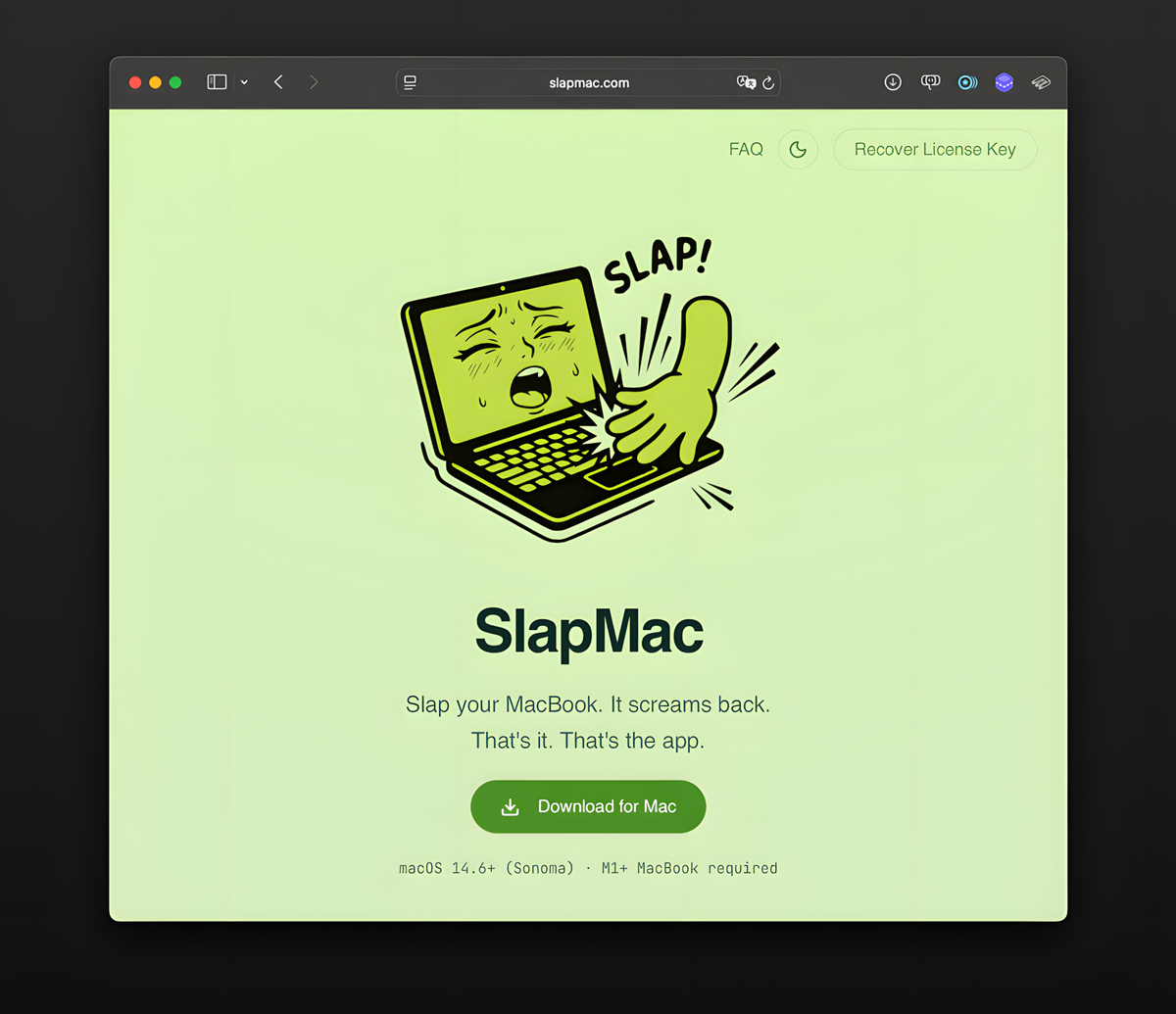
The system itself becomes the output. Look at my Notion setup. Look at my task management flow. The system is impressive. What has it produced? Nothing. But the system is really impressive. This is procrastination disguised as preparation. It is fear of creation dressed up as optimisation. It is easier to build the meta than to build the thing.
The post itself
You're Coaching Too Much
- 🪤 The coaching trap — Engineering managers often over-rely on the coaching model — asking open-ended questions instead of providing answers — because it has become an unquestioned industry orthodoxy. While intended to empower, it is sometimes the exact opposite of what an employee actually needs.
- ⚠️ The three failure modes of coaching — Managers typically misuse coaching in three ways: withholding information when someone just needs a direct answer, using questions to avoid the discomfort of giving direct performance feedback, and performing the “coach” role simply to look like a modern leader.
- ⚖️ Your manager is not your coach — A genuine coaching relationship relies on zero consequences for vulnerability. Because managers control compensation, promotions, and firing, that dynamic cannot truly exist. Leaders shouldn't use coaching to abdicate their actual management duties.
- ⚙️ Engineers are not generic employees — In an engineering context, people heavily value directness, speed, and technical respect. Withholding technical answers you already know to force a “discovery” process is often perceived as condescending rather than empowering.
- 🧭 Managing can be the generous act — Coaching assumes the person already has the answer inside them. Sometimes, the most generous and helpful thing a leader can do is just be direct, provide the missing context, or simply point at the path and say, “that one, go.”
- 🧠 Situational awareness over orthodoxy — Great leadership isn't about rigidly sticking to one style. It’s about reading the room: you should coach for long-term development, direct when there is time pressure or a performance issue, and collaborate when neither of you has the full picture.
Invest Your Political Capital
- 💰 Political Capital as Currency — Change agents need to build up "goodwill credit" before spending it on major transformations — you can't just arrive and immediately push through big changes without earning trust first
- 🏦 The Piggy Bank Model — Save political capital slowly through consistent good behavior, then spend it strategically on major changes rather than depleting it with small battles everywhere
- ✅ Building Your Balance — Earn capital through delivering results, being transparent, listening actively, giving credit to others, owning mistakes, mentoring, and staying consistent under pressure
- 📉 Smart Spending Strategy — Use political capital purposefully for bringing necessary change, questioning status quo, asking for leaps of faith, or escalating important issues — but don't waste it on "told you so" moments
- 🎯 Save Big for Big Impact — Rather than making small tactical withdrawals daily, accumulate capital to make one major strategic move when the timing is right — like getting approval to operate critical infrastructure against established processes
- 🌍 Cultural Awareness Matters — How you build and spend political capital varies significantly by region — what works in Western cultures (like admitting mistakes) may backfire in places where "saving face" is paramount
- ⚖️ Balance Check Method — Test your political capital balance by asking for small favors — if people say "we'd love to help but have no time," your balance is near zero
- 🎭 Avoid Manipulation Trap — Don't use deposits as quid pro quo for immediate withdrawals — genuine relationship building differs from transactional favor-trading that makes you appear dishonest
Oh, btw., I've also written about workspace politics, you might want to check it out.
Do Less
- 🧠 Learning is like digestion, not data transfer — Cramming information faster doesn't lead to better absorption; ideas need downtime to be processed, connected, and integrated with existing knowledge
- 📚 Speed-reading sabotages comprehension — Reading two books per week and using speed-reading apps led to poor retention; the author could barely remember what books were about a week later
- 🧘 True relaxation means turning off the optimization machine — At a meditation retreat, the author failed to reach jhana because they were still "optimizing" their relaxation rather than genuinely letting go
- 💡 Best ideas come from unstructured time — Hot yoga classes with no phone access consistently generated better ideas than hundreds of hours of podcasts
- ⚡ "More isn't more. More is actually less" — The fundamental principle that doing more doesn't necessarily lead to better results applies across multiple life domains and time scales
- 🎯 Restful activities should be atelic — Truly restorative activities aren't directed toward end goals; trying to optimize rest destroys its benefits of sanity, inspiration, and wholeness
- 🔄 Optimization addiction creates self-defeating cycles — Noticing that rest has positive outputs, then trying to optimize those outputs, ruins the rest itself
- 📖 "Do Less" as the anti-book to "You Can Just Do Things" — The author recognizes their previous yang-focused advice needs a yin counterbalance emphasizing patience, receptivity, and flowing with existing momentum
Vitamin R for Engineering Leaders: Recovery
- 🧠 Emotional Latency — Just like system latency, leaders experience delays between emotional events and their ability to show up fully for the next situation, carrying mental baggage from one meeting to another
- 🔄 Recovery as a System — The most critical system to manage as a leader is yourself; recovery isn't about perfection but about having robust habits that bring you back to baseline after setbacks
- ⚡ Quick Recovery Techniques — Simple practices like writing down concerns and scheduling reflection time (60 seconds + 15 minutes later), physical resets between meetings, and the 5-5-5 rule ("Will this matter in 5 minutes/months/years?")
- 💨 Box Breathing Reset — Using 4-second box breathing cycles (inhale-hold-exhale-hold) helps shift from "fight" mode back to calm, deliberate leadership presence
- 🛠️ Preventive Maintenance — Like removing overloaded nodes from rotation, leaders need "non-decision time" blocks, zero-notification hours, and scheduled PTO to prevent burnout rather than just react to it
- 💪 Growth Through Rest — Similar to muscle growth happening during rest periods, leadership capacity grows during recovery phases — sustained high intensity without recovery leads to injury, not improvement
- 🎯 Habits Over Perfection — One bad meeting doesn't define competence; the real deficiency occurs when you stop the recovery process and fail to return to baseline leadership habits
10 Prioritization Traps
- 🔥 Burning Down the House — Teams get stuck in reactive mode, constantly fighting fires instead of preventing them. Solution: protect 10-20% of capacity for prevention work and treat exceptions as escalations.
- ⏰ Too Much Time on My Hands — Projects drag on with endless refinement while missing the 80/20 rule. Teams polish medium-value work far beyond what's needed. Solution: force early cuts and commit to shipping minimal viable versions within 2-4 weeks.
- 👑 Everybody Wants to Rule the World — High-priority work gets diluted because teams can't actually drop other commitments. Leadership says it's critical but doesn't create real focus. Solution: explicitly name what teams can drop for the priority.
- 📉 Just Enough Is Never Enough — Teams consistently ship the bare minimum and miss opportunities to capture real value. They move on too quickly without capitalizing on promising early results. Solution: pre-authorize follow-on investments before shipping.
- 🏃 Running on Empty — Death march projects that defy adding more people and have no clear "done" definition. They become permanent roadmap fixtures that slow everything down. Solution: set clear off-track signals and decision checkpoints.
- 💭 Dreamer — Innovation efforts that either lack creative freedom or have no forcing functions. They're either treated like regular projects or given unlimited protection without accountability. Solution: add enabling constraints like shipping deadlines or integration requirements.
- 🐌 Slow Ride — Hidden friction that impacts everyone but gets deprioritized because workarounds exist. The cumulative cost is massive but invisible to leadership. Solution: quantify the drag and reframe as cost-of-delay rather than "tech cleanup."
- ♾️ Someday Never Comes — High-impact opportunities that never get started because there's no clear solution. Organizations wait for certainty instead of taking a portfolio approach. Solution: run low-cost experiments focused on reducing uncertainty, not solving the problem.
- 🤖 The Logical Song — Prioritization frameworks that overvalue confidence without considering the cost of increasing that confidence. Teams choose "safe" bets over opportunities where learning is fast and cheap. Solution: add "how cheaply can we increase confidence?" to prioritization criteria.
- 🧩 Takin' Care of Business — Teams invent busywork when blocked instead of having meaningful small-batch items ready. This leads to wasted effort on work that doesn't move any needles. Solution: maintain a visible "pull queue" of low-risk, high-value small tasks.
That’s all for this week’s edition
I hope you liked it, and you’ve learned something — if you did, don’t forget to give a thumbs-up, add your thoughts as comments, and share this issue with your friends and network.
See you all next week 👋
Oh, and if someone forwarded this email to you, sign up if you found it useful 👇